Aluminum Castings: Custom Solutions for Industrial Applications
Wiki Article
Opening the Prospective of Aluminum Castings: Useful Insights and Specialist Solutions
Aluminum castings existing considerable advantages in numerous making fields. Their corrosion-resistant and lightweight residential properties make them optimal for requiring applications. Technologies in casting modern technologies further boost their possibility. Professional solutions assist enhance designs for maximum efficiency and efficiency. As markets develop, understanding these components ends up being necessary. The implications of these improvements could reshape the future of production. What growths lie in advance for aluminum castings?The Benefits of Aluminum Castings in Modern Production
Although different products are used in production, aluminum spreadings stand apart for their distinct benefits. Their lightweight nature permits for reduced energy usage throughout transportation and setting up, making them an environmentally friendly option. The versatility of aluminum allows suppliers to produce intricate shapes and complex layouts, which can be tailored for certain applications. Furthermore, light weight aluminum castings exhibit excellent corrosion resistance, enhancing the longevity of items in numerous settings.The capability to accomplish tight tolerances contributes to the precision of ended up parts, lowering the requirement for extensive machining. In addition, light weight aluminum's thermal conductivity makes it ideal for applications requiring efficient heat dissipation. The recyclability of light weight aluminum likewise adds to its charm, aligning with sustainable production practices. Overall, the benefits of aluminum spreadings promote cutting-edge style options and add to economical production processes, positioning them as a preferred option in several sectors today.
Secret Feature of Light Weight Aluminum That Enhance Efficiency
Light weight aluminum possesses numerous essential buildings that considerably boost its performance in numerous applications. Its sturdy and lightweight nature, paired with superb deterioration resistance, make it an optimal selection for numerous industries. Furthermore, light weight aluminum's outstanding thermal conductivity better adds to its versatility and performance in manufacturing procedures.Sturdy and lightweight
An impressive mix of resilient and light-weight characteristics makes light weight aluminum an ideal product for various applications. This special residential or commercial property enables makers to create components that minimize total weight without compromising stamina. The reduced density of aluminum adds to improved gas effectiveness in aerospace and auto industries, where light-weight building and construction is paramount. In addition, its sturdiness guarantees durability and integrity in demanding atmospheres, making it suitable for items varying from consumer electronics to commercial equipment. The capacity of aluminum to endure mechanical stress and anxieties while staying light results in innovative designs and boosted efficiency throughout various industries. On the whole, aluminum's durable and lightweight nature significantly boosts its charm, driving improvements in modern technology and engineering services.Deterioration Resistance Perks
The remarkable light-weight and durable properties of aluminum are enhanced by its extraordinary rust resistance, making it an extremely useful product across various markets. This resistance is largely credited to the development of a protective oxide layer that naturally develops on its surface area. This layer functions as an obstacle, stopping wetness and other destructive representatives from penetrating the steel. As a result, aluminum castings show boosted long life, lowering the need for constant replacements or repair work. Industries such as automobile, aerospace, and marine considerably gain from this building, as it adds to the total performance and reliability of their items. By reducing corrosion-related failings, aluminum castings assure reduced maintenance expenses and improved security, further strengthening aluminum's function as a preferred product in demanding environments.Superb Thermal Conductivity
One of the standout features of aluminum is its exceptional thermal conductivity, which significantly improves the efficiency of various applications. This property enables light weight aluminum to efficiently move heat, making it excellent for elements in auto, aerospace, and electronic sectors. The capability to dissipate warmth properly reduces the threat of overheating, consequently boosting the longevity and integrity of items. Wisconsin Aluminum Foundry. Additionally, light weight aluminum's light-weight nature incorporated with its thermal performance adds to power cost savings in heating and cooling systems. The combination of these features positions aluminum spreadings as a premium selection for suppliers looking for efficiency and effectiveness. As sectors increasingly focus on sustainable techniques, aluminum's thermal conductivity also plays a critical role in enhancing power usage and minimizing environmental influenceTechnologies in Aluminum Spreading Technologies
As markets continue to look for lighter and much more efficient materials, technologies in light weight aluminum spreading technologies are emerging to meet these needs. Breakthroughs in 3D printing and additive manufacturing have allowed the production of intricate geometries that were previously tough or impossible to accomplish. These approaches decrease material waste and permit quick prototyping, considerably shortening development cycles.Furthermore, the intro of advanced alloys and heat therapy procedures has enhanced the mechanical homes of aluminum spreadings, making them appropriate for requiring applications in vehicle and aerospace sectors. Methods such as vacuum casting and pass away casting have actually boosted the top quality and uniformity of actors products, reducing flaws and optimizing efficiency.
Automation and man-made intelligence are being incorporated right into the casting procedure, facilitating real-time tracking and control, which ensures higher precision and performance. These developments jointly place aluminum casting as a forward-thinking selection for industries intending for sustainability and efficiency.
Essential Services for Optimizing Light Weight Aluminum Castings
To achieve optimal performance in aluminum spreadings, several crucial services play a vital role. Design optimization methods, quality guarantee procedures, and ending up and finish options are vital components that can substantially enhance the end product. Recognizing and executing these solutions can lead to boosted sturdiness and functionality of aluminum castings.Layout Optimization Techniques
Effective design optimization methods are vital for enhancing the performance and effectiveness of light weight aluminum spreadings. These strategies involve a methodical technique to improving the geometry and requirements of actors parts. By leveraging computer-aided layout (CAD) software, engineers can simulate various layout circumstances to determine the most effective forms and frameworks. Additionally, finite component evaluation (FEA) is used to predict just how styles will behave under tension, permitting adjustments that Wisconsin Aluminum Foundry boost longevity while lessening material use. Including style for manufacturability (DFM) principles assurances that the casting procedure is structured, minimizing manufacturing costs and preparation. Eventually, these optimization strategies add to enhanced mechanical buildings and total product quality, leading the way for improved functionality in different applications.
Quality Control Processes
Quality control processes play an important duty in the optimization of aluminum castings, guaranteeing that each component fulfills stringent performance and durability standards. These procedures typically encompass strenuous evaluation procedures, consisting of dimensional checks, metallurgical evaluation, and non-destructive testing techniques. By employing sophisticated modern technologies such as ultrasonic testing and X-ray evaluation, producers can recognize possible flaws early in the production cycle. Furthermore, adherence to market standards, such as ISO accreditations, strengthens reputation and dependability in the last products. Continuous monitoring and responses loops help improve manufacturing methods, additionally improving high quality. Ultimately, effective quality control not only reduces waste and rework but additionally optimizes client satisfaction by supplying light weight aluminum castings that execute consistently under demanding conditions.Completing and Finishing Options
Completing and covering alternatives are crucial for improving the performance and longevity of light weight aluminum castings. Numerous techniques, such as anodizing, powder finishing, and painting, can substantially improve deterioration resistance and aesthetic charm. Plating increases surface area solidity and improves resistance to put on, while powder covering gives a colorful and long lasting coating that holds up against rough atmospheres. Furthermore, paint provides adaptability in style however may call for more regular upkeep. The choice of finishing approach depends on the designated application, ecological exposure, and preferred look. Correct surface preparation and application strategies are very important to accomplishing ideal results. By choosing proper completing and coating alternatives, suppliers can guarantee that aluminum castings not just fulfill functional requirements but likewise maintain their visual integrity with time.Applications of Aluminum Castings Across Industries
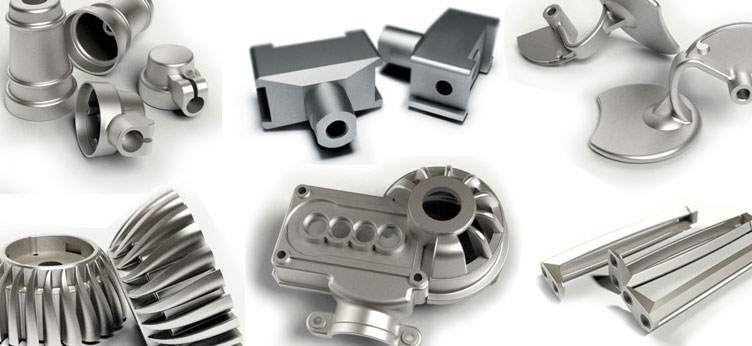
Light weight aluminum spreadings play an important function in numerous industries, showcasing their convenience and flexibility across numerous applications. In the automobile market, light weight aluminum spreadings are made use of for engine components, transmission housings, and wheels, contributing to light-weight frameworks that boost gas performance. The aerospace sector advantages from light weight aluminum castings in important parts, such as aircraft frames and engine components, where strength-to-weight proportions are extremely important.The electric and electronic devices markets take advantage of aluminum spreadings for housings and warmth sinks, making sure efficient thermal administration. In the building sector, light weight aluminum castings are made use of in architectural elements and architectural components, giving both visual appeal and toughness. Additionally, durable goods commonly feature aluminum spreadings in things like kitchenware and appliances, highlighting their usefulness and ease of manufacturing. Generally, the varied applications of light weight aluminum castings underscore their significance in driving innovation and effectiveness throughout numerous areas.
Future Trends in Light Weight Aluminum Spreading Solutions
As industries significantly prioritize sustainability and performance, future trends in aluminum spreading solutions are expected to concentrate on innovative manufacturing techniques and ingenious products. Metal Castings. One substantial trend is the adoption of additive production, which permits complex geometries and reduced waste, boosting the overall efficiency of production. In addition, the integration of wise innovations, such as IoT and AI, is expected to enhance the casting procedure, making it possible for real-time surveillance and predictive upkeepSustainable techniques will likewise get prestige, with an emphasis on reusing aluminum and using environment-friendly additives. Additionally, the growth of light-weight alloys will certainly facilitate the creation of more powerful, much more sturdy parts that meet the demands of various sectors, consisting of automotive and aerospace. As research study and advancement continue to advance, these trends will likely redefine light weight aluminum spreading, placing it as an essential player in the shift towards a much more sustainable manufacturing landscape.
Regularly Asked Questions
Exactly How Do Light Weight Aluminum Castings Contrast to Various Other Materials in Price?
Aluminum castings normally provide an affordable price contrasted to products like steel and titanium, especially in lightweight applications. Their cost, integrated with desirable residential properties, makes them a preferred selection in numerous industries for cost-effective solutions.
What Are Common Problems in Aluminum Castings and Exactly How to avoid Them?
Usual issues in light weight aluminum spreadings include shrinking, surface, and porosity blemishes. Protecting against these concerns entails mindful control of pouring temperature levels, correct mold layout, and extensive top quality examinations throughout the casting process to assure ideal outcomes.Can Aluminum Castings Be Recycled, and Exactly How Does It Influence the Environment?
Light weight aluminum spreadings can be recycled efficiently, significantly minimizing environmental impact. Reusing saves energy, decreases greenhouse gas emissions, and minimizes land fill waste, adding to a much more lasting cycle of product use within sectors and advertising eco-friendly techniques.What Is the Normal Lead Time for Light Weight Aluminum Casting Projects?
The regular lead time for aluminum spreading jobs ranges from 2 to six weeks, relying on aspects such as quantity, intricacy, and tooling requirements. Reliable preparation can substantially lower this timeframe while making sure top quality end results.Just How Can I Pick the Right Aluminum Alloy for My Certain Application?
Picking the ideal light weight aluminum alloy entails assessing mechanical residential properties, deterioration resistance, and thermal conductivity. Consulting material requirements and understanding application demands, as well as skilled guidance, can significantly assist in making an informed choice.Furthermore, the intro of sophisticated alloys and heat treatment processes has actually enhanced the mechanical residential properties of light weight aluminum spreadings, making them appropriate for demanding applications in automotive and aerospace industries. Effective style optimization methods are essential for enhancing the performance and effectiveness of light weight aluminum spreadings. Ending up and coating alternatives are important for improving the efficiency and long life of light weight aluminum spreadings. Light weight aluminum spreadings play a vital function in various markets, showcasing their convenience and versatility throughout multiple applications. In the automobile sector, light weight aluminum castings are made use of for engine elements, transmission real estates, and wheels, adding to lightweight structures that improve fuel efficiency.
Report this wiki page